
TL;DR
The Stryker Hack is Every IT Pro’s Sleep Paralysis Demon
Let’s talk about Stryker. A pro-Iranian group didn't just hack them; they used Microsoft Intune the very tool meant to manage and protect devices to mass-wipe thousands of endpoints. Imagine paying for a security system that the burglar then uses to lock you in your own panic room.
The FBI is Buying Your Data (While "Protecting" Your Privacy)
The irony of the week award goes to the FBI. In the same breath that they’re taking down hacktivist websites to "protect" us, the Director confirmed they’re just... buying your location data from commercial brokers.
Your iPhone is a $1,200 Vulnerability
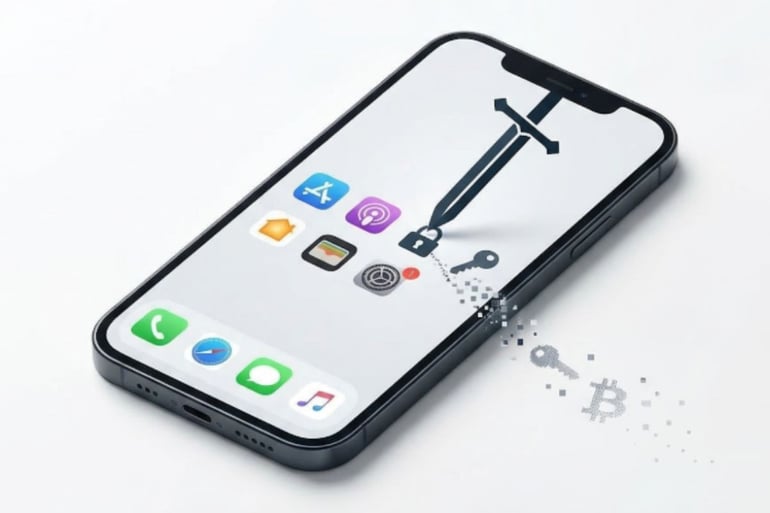
For the "I have an iPhone, I’m safe" crowd: The ‘DarkSword’ exploit just put 270 million of you on notice. One compromised website and your "walled garden" becomes a public park for hackers.
THIS WEEK’S TOP STORY
The FBI Is Literally Buying Your Data… And the Director Just Admitted It!

Not hacking it. Not subpoenaing it. BUYING it. From data brokers. About American citizens.
The FBI director confirmed it this week and the internet briefly lost its mind before moving on to argue about something else. Don't let this one slip by.
The kicker: This is completely legal. That's either reassuring or terrifying depending on how much you trust the government with a map of everywhere you've ever been.
Learn more: https://techcrunch.com/2026/03/18/fbi-is-buying-location-data-to-track-us-citizens-kash-patel-wyden/
OUR TAKE
The question nobody's asking enough: If the FBI can buy it... who else is buying it right now?
Seriously…
Your AI is being weaponized, your iPhone has a sword in it, the FBI is paying to watch you, and Iran just remotely wiped a hospital's computers.
And no one seems to be asking any questions…

CLICK HERE → FIND OUT YOUR SCORE
Headlines
March 20, 2026
You didn't click a sketchy link. You didn't download a rogue app. You just... browsed. And that might be enough.
March 20, 2026
The uncomfortable truth: We moved our most sensitive data into someone else's building and then assumed their locks were better than ours. Sometimes they are. Sometimes... this week's news.

March 20, 2026
The uncomfortable truth: We moved our most sensitive data into someone else's building and then assumed their locks were better than ours. Sometimes they are. Sometimes... this week's news.
Editorial
Stryker, DarkSword, Copilot injections, corporate WiFi… attackers aren't breaking in anymore, they're walking through the front door

Giphy
The perimeter is dead. This week proved it.
For decades, cybersecurity operated on a single organizing principle: build a wall, guard the door, keep the bad guys out. Firewalls. Passwords. Two-factor authentication. The entire architecture of digital security was essentially a moat around a castle.
This week, the castle burned down from the inside.
A pro-Iranian hacker group didn't crack Stryker's defenses through some Hollywood-style breach… they walked in through a device management system that was supposed to be a security tool, and remotely wiped thousands of machines across one of America's largest medical technology companies. The FBI seized their websites Thursday. The damage was already done.
Meanwhile, researchers revealed that Microsoft Copilot the AI assistant sitting inside millions of corporate inboxes right now, summarizing your emails, drafting your responses, can be quietly manipulated to generate phishing messages that look identical to legitimate AI output. The attack doesn't break your tools. It wears them as a costume.
And then there's DarkSword. A newly uncovered iPhone exploit affecting up to 270 million devices that requires no download, no suspicious link, no user error whatsoever. Just a compromised website. Just bad luck.
The throughline here isn't a bad week for cybersecurity. It's something more fundamental: every attack vector that made headlines this week was a trusted system turned against its user.
A device manager.
An AI assistant.
A browser.
Even the FBI — which confirmed this week it is purchasing location data on American citizens from commercial brokers, no warrant required.
This is what the next era of security actually looks like. Not enemies at the gate. Enemies inside the tools you depend on daily, operating quietly, arriving without fanfare, often indistinguishable from the real thing until it's too late.
Bridewell's 2026 critical infrastructure report, also released this week, put a number on the scale of what we're facing: 93% of critical infrastructure organizations reported a cyberattack in the past year. Nearly a third lost revenue. The most common weapon remained phishing. Not because it's sophisticated, but because it works, averaging 11 attempts per organization annually, because humans inside trusted systems are still the most reliable vulnerability of all.
The report's most striking finding wasn't an attack statistic. It was this: AI has entered the top tier of security concerns for the first time. Not because AI is new. Because it's finally capable enough to matter… on both sides of the fight simultaneously.
Here's what that means practically: the organizations that figure out how to govern AI while deploying it defensively will widen the gap on everyone else. The ones still debating whether to adopt it are already behind attackers who made that decision 18 months ago.
The perimeter model assumed you could define an inside and an outside. That distinction is gone. Your inside is the attack surface now… your AI tools, your device managers, your cloud infrastructure, your trusted systems.
The castle metaphor served us well. But you can't moat your way out of a threat that's already sitting at the table.
Other News From Around The Web
FBI seizes pro-Iranian group’s websites after destructive Stryker hack
Federal authorities took down two sites linked to the pro-Iranian hacktivist group Handala after last week’s disruptive attack on medical technology giant Stryker—showing how quickly a high-profile intrusion can spill into law enforcement action and geopolitical signaling.
Source: TechCrunch | Thu, Mar 19
CISA warns companies to lock down Microsoft Intune after Stryker device wipe
In the wake of the Stryker incident, CISA is urging organizations to secure remote device management systems after hackers reportedly used Intune access to mass-wipe thousands of endpoints.
Source: TechCrunch | Thu, Mar 19
Breach roundup: Stryker, FBI surveillance network, France healthcare, Hawaii Cancer Center
This week’s breach news reinforces the scale of the moment: nation-state-linked activity, healthcare exposure, and infrastructure-oriented compromise all featured prominently.
Source: Kaseya | Wed, Mar 18
📱 Exploits, Patches & Trusted-Platform Risk
Microsoft issues emergency Windows 11 hotpatch for critical RRAS flaws
Microsoft released an out-of-band patch for critical RRAS vulnerabilities in Windows 11 that could enable remote code execution through malicious remote servers—another reminder that edge-facing Windows services need fast patching and review.
Source: TechRepublic | Mon, Mar 16
Researchers uncover prompt injection risk inside Microsoft Copilot
A new report shows how prompt injection can manipulate Copilot into producing convincing phishing content inside trusted AI summaries—an important warning that AI assistants can inherit the trust boundaries of the platforms they sit inside.
Source: TechRepublic | Tue, Mar 17
🏛️ Government Tech, Surveillance & Resilience
FBI director confirms agency is buying location data on U.S. citizens
TechCrunch reports the FBI director confirmed the bureau purchases commercially available location data—likely renewing debate over surveillance, data brokers, and the privacy gap between commercial and government collection.
Source: TechCrunch | Wed, Mar 18
Disaster response gets a data upgrade with Census emergency mapping tool
The Census Bureau’s updated OnTheMap for Emergency Management uses population and workforce data to support response and recovery planning for floods, fires, hurricanes, and other disasters.
Source: Nextgov | Mon, Mar 16
Enterprise IT consolidation may be optional now—but not for long
A Nextgov commentary argues that in aging, budget-constrained enterprise environments, IT consolidation is becoming less of a strategy choice and more of an eventual necessity.
Source: Nextgov | Wed, Mar 18
🤖 AI in Cybersecurity: From Advantage to Anxiety
AI enters the top tier of CNI cyber concerns
Bridewell’s latest critical national infrastructure report finds AI risk has jumped into the highest tier of security concerns, even as organizations increasingly adopt AI for threat hunting and incident response.
Source: Computer Weekly | Thu, Mar 19
Corporate Wi-Fi emerges as a target for AI-driven attacks
A Cybercrime Magazine roundup warns that ordinary office wireless networks are becoming more attractive targets as AI accelerates attack speed, automation, and reconnaissance.
Source: Cybercrime Magazine | Thu, Mar 19
How secure is data stored by cloud providers?
A cloud-security-focused piece revisits a basic but still urgent question: as more of the world’s data sits with external providers, security posture, architecture, and shared-responsibility discipline matter more than ever.
Source: Cybercrime Magazine | Mon, Mar 16
The Bottom Line
This week wasn't about hackers being smarter.
Every major incident, from Iran remotely wiping Stryker's devices through a trusted management tool, to AI assistants being weaponized from inside your own inbox, to 270 million iPhones sitting exposed to a exploit that requires nothing from you, shared the same uncomfortable truth: the systems you trust the most are now the systems most worth attacking.
Until security strategies catch up to that reality, the breaches won't slow down. They'll just keep arriving through the front door, wearing a familiar face.